
Dec. 2026
Wendy Schneider
What can poetry reveal about a country that headlines cannot? For Israeli educator Rachel Korazim, poetry offers a window into the experiences, emotions and moral questions that have shaped Israel across generations. Through two new bilingual anthologies, she brings this writing to English-speaking readers for the first time. The Mirror of the Times is devoted to the work of Natan Alterman, one of Israel’s most influential poets, and Shiva is a collection of poems written in the aftermath of October 7. Though separated by decades and very different circumstances, the collections offer a compelling portrait of Israeli society, capturing its aspirations, contradictions, grief and resilience.
My connection with Korazim began during the COVID pandemic, when I discovered her online classes in Hebrew, poetry and literature while searching for something to help me through those isolating days. What began as a way to stay connected became a lasting appreciation for her teaching and her ability to bring Hebrew poetry to life. Her classes offered not only insight into Israeli literature but a deeper understanding of the country’s history, culture and ongoing debates. In 2022, I had the opportunity to meet Korazim in person at her home in Jaffa and interview her for the Hamilton Jewish News. I recently reconnected with her to discuss her two anthologies, Alterman’s work and the relevance of his poetry today.
Why Alterman, why now?
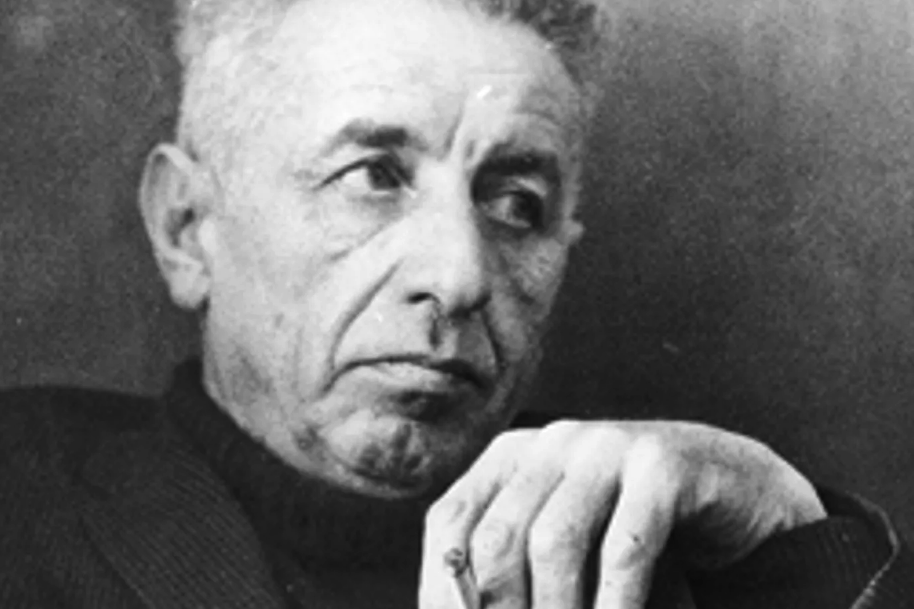
Born in Poland in 1910, Natan Alterman immigrated to British Mandate Palestine as a teenager and became one of Israel’s most influential poets and journalists. For nearly four decades, his weekly column, The Seventh Column, in the daily Davar, used poetry to respond to defining moments in Jewish and Israeli life, from the Holocaust and the founding of Israel to the Six-Day War.
Alterman celebrated the sacrifices made to establish a Jewish state, but he also challenged Israel when its actions fell short of its moral responsibilities. He wrote about the mistreatment of immigrants from North Africa, the condescension directed at Holocaust survivors and the conduct of Israeli soldiers.
For Korazim, this ability to combine deep commitment with honest criticism is what makes Alterman so relevant today.
“The ability to hold more than one thing to be true at the same time,” she said, “the ability to claim total loyalty to the cause and at the same time criticize it, is something we have lost.”
That tension is evident in two poems Alterman deliberately placed side by side in an earlier collection.
The Silver Platter, written in December 1947, honours the young people whose sacrifices would make the establishment of Israel possible. Al Zot, written in response to a November 1948 incident in which Israeli troops killed civilians in an Arab village where they had encountered no armed resistance, condemns the soldiers’ actions.
Alterman addressed the incident in his newspaper column. Two days later, David Ben-Gurion, then prime minister and defence minister, praised the column as a moral defence of the Israel Defense Forces and ordered 100,000 copies distributed to soldiers.
For Korazim, the episode represents a striking moment in Israel’s history: the country’s leading poet publicly criticized the military, and the prime minister endorsed that criticism.
“Could you even imagine anything remotely resembling what I am talking to you about?” she asked, reflecting on today’s political climate.
The Alterman anthology grew out of a conversation between Korazim and her longtime student and collaborator, Michael Bohnen of Newton, Massachusetts. After one class, he said he was struck by the fact that many well-read North American Jews had never encountered this substantial body of Israeli literature in translation. Together, they began collecting poems Korazim had taught.
Korazim worked with a team of translators by preparing rough translations, which the team refined to stay true to Alterman’s Hebrew while making the poems work as poetry in English. They chose meaning over rhyme, while striving to preserve the original’s rhythm and musicality.
Finding words after October 7
Korazim’s commitment to bringing Israeli voices to English-speaking readers took on new urgency after October 7. The result was Shiva, a bilingual anthology of poems written during the first six months following the attacks.
Korazim was in Budapest with her husband for the High Holidays when the attacks occurred. Unable to secure flights home, they remained in Hungary as news of the atrocities unfolded. During the first Shabbat after October 7, she listened online as Rabbi Angela Buchdahl of New York’s Central Synagogue began her remarks with the Hebrew words ein milim—no words. Korazim shared that sense of anguish, but believed words would eventually emerge.
She began searching online for poems written in response to the attacks, collecting them as they appeared. The anthology captures a raw period of grief and anger, religious doubt, questions about military failures and longing for the hostages’ return.
The contributors include social workers, therapists, rabbis, teachers, and military personnel, many of whom had never considered themselves poets. Their work gives voice to a range of responses, rather than attempting to offer a single account of what Israelis were feeling.
Intended primarily for Diaspora Jews seeking a deeper understanding of Israeli experiences beyond the news, Shiva has found a particularly strong audience outside Israel. More than 7,000 copies have been sold, raising more than $40,000 for the Israel Trauma Coalition.
Making room for nuance
Asked what she hopes Canadian Jewish readers will take from the two anthologies, Korazim emphasized the importance of recognizing that Israelis, like Canadians, do not speak with one voice.
“More than one thing can be true… You can be heartbroken, yet see that they are human beings across the border. You can be totally against Bibi and yet lament the fall of a soldier…. So I think nuance is the most important thing,” she said.
That idea connects the two collections. Alterman’s poetry demonstrates that deep commitment to Israel can coexist with moral criticism. The poets in Shiva bring readers closer to the grief, uncertainty and difficult questions Israelis continue to confront after October 7.
Together, the anthologies offer a way to understand Israel beyond headlines and political arguments, through the words of people trying to make sense of their country and their times. They remind us that sometimes the best way to understand a place is to listen to its poets.
Photo Caption: The Voice of a Generation: Acclaimed Hebrew poet and journalist Natan Alterman.