
April 2026
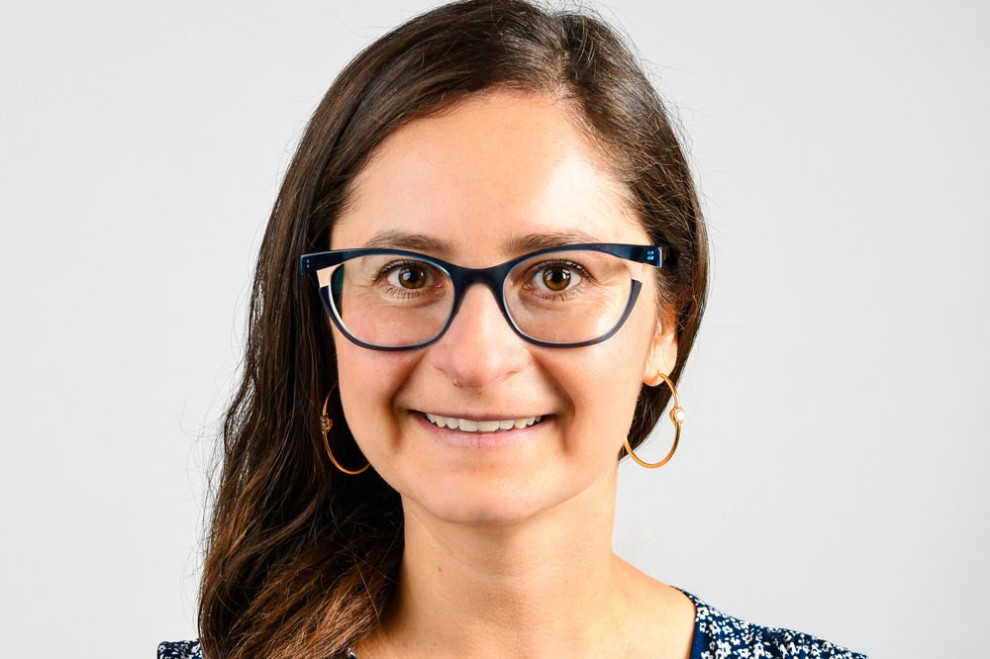
Jen Gilbert
Four years ago, I moved to Kitchener and quickly built a life that was perfect for me. I made new friends and had no need for anything beyond the arts, culture, and education I sought. (I moved to attend Conestoga College to study graphic design.)
Reaching out to the local Jewish community through the Waterloo Region Jewish Community Council (WRJCC) was nowhere on my list of things to do. I had tried making Jewish friends in the past, but never felt like I fit in. At that point, in Kitchener, I was an unaffiliated Jewish person — I identified as Jewish, had no local Jewish friends, didn’t belong to a synagogue, and had no interest in joining the WRJCC. That is, until Oct. 7, 2023. Then everything changed.
My story isn’t uncommon. There are unaffiliated Jews everywhere. Defining the unaffiliated has no set rules; each person has their own interpretation and identification.
The unaffiliated in Hamilton could be someone who moved here from Toronto and goes back most weekends; it could be someone who grew up affiliated, drifted away as a young adult, and came back after having kids; it could be someone who only attends shul once a year on the high holidays; or, someone who has Jewish friends, yet doesn’t participate in anything community or synagogue related.
I’ll never forget the moment I learned of the terror attacks on our people Oct. 7.
I felt my world tilt, and in the days that followed, I went through the motions of life in a rattled daze, my mind not fully able to focus. I spent countless hours on the phone with my parents, trying to process everything. My closest girlfriend in Kitchener, a friend who dropped everything in times of need, was no longer there for me, sharing anti-Zionism resources and antisemitic propaganda on her social media. I had to say goodbye to our friendship.
I felt alone and unsettled. And I was scared.
There were antisemitic incidents in my classroom, and as the weeks went by, my relentless fear and feeling of isolation grew. Deep down, I knew I needed Jewish connections — the pull to that community was immense. I needed people in my life to whom I didn’t have to explain or defend my right to exist — people who just “got it.” My journey to affiliation was about to begin.
One day, I decided to go to a rally for hostages at Kitchener City Hall. The WRJCC’s leader, whom I had never met before, approached me and gave me a hug. She introduced me to a Jewish girl who was also new to the region.
We instantly hit it off; it was bashert. We could be real with each other — there was no sugarcoating anything. To this day, when we’re overwhelmed or see acts of antisemitism, we immediately connect.
My local Jewish community has expanded. I’ve been welcomed with open arms, and feel like I belong. I consider myself lucky that I met the right person who showed me that safe community exists, but I also recognize my role in being brave and showing up, an intimidating and challenging task in a community where people have known each other for years. I’ve met others in my position, looking for community too.
I can express gratitude to be affiliated in my local Jewish community, an act I never thought I’d express three years ago. And now, I wouldn’t have it any other way.
Can you relate to the stories on these pages? Do you feel Oct. 7 made you more driven to seek Jewish connections? I want to hear your story and continue this conversation next issue. Connect with me at: [email protected].
Jen Gilbert, a Hamilton native living in Kitchener, brings her voice to Hamilton Jewish News in a series that profiles unaffiliated young families as they reconnect with their roots and Jewish life
THE TIES THAT BIND
Why young Jews are seeking to reconnect with their roots
Hamilton has a pretty stellar Jewish community. At least, that’s the impression I got from interviewing Sara Egier and Ali Kellner for this series. It’s a sisterhood you fall for the moment you join—and having left Hamilton, I can’t help but feel a little jealous. Feeling a little FOMO, to be honest. But I’m also feeling incredibly excited: excited for all the unaffiliated Jews living in Hamilton — new and homegrown — wanting to find their people, and knowing what a comfort it will be for them when found.
Egier and Kellner both experienced affiliated Jewish upbringings, drifted away from the community between high school and having kids, and found their way back, each in their own way. Did their return to affiliation have anything to do with a need to seek Jewish connections post-Oct. 7? In some ways, yes. But their journeys back had already begun the year before.
I thought this would be an easy story to write—that there was a clear path young unaffiliated Jews were taking back to community after Oct. 7, that they were reconnecting simply because they needed support. How narrow-minded of me. Of course, there are infinite reasons to seek Jewish community, no matter what’s going on in the world. But what I’ve noticed is that no matter our affiliation “status,” those who grew up affiliated feel a deep connection to their Jewish identity. And it’s this identity (religious, cultural, or both) that’s always simmering below the surface. As Sara Egier said, “I think at our core, we know that it’s an important part of who we are as individuals and carries important values with it.” Is our strong sense of Jewish identity tied to having grandparents who survived the Holocaust, as Sara, Ali, and I do—and is that what has driven us to reconnect and become more affiliated after Oct. 7?
Following our conversations, I’m left with more questions than answers. Even if we have Jewish affiliation, why do we seek out connections even more after a collective tragedy?
Why do we suddenly need these connections so deeply, yet can exist without them in the absence of tragedy? And how is it so easy to form a Jewish sisterhood — that instant connection, like you’ve known someone forever — even after you’ve just met? For now, all I can say is we’re all grateful that our affiliation makes life that much more bearable, tolerable, and the load less heavy, throughout the hard times.
Jews get it. Each generation carries the weight of our ancestors’ persecution and survival throughout thousands of years. No matter our cultures and experiences, Jewish people from around the globe, on some innate level, seem to understand one another. “You can’t explain it to anyone who’s not Jewish. They don’t know,” said Ali in reference to being able to vent, talk about Oct. 7, and to feel seen and heard. I couldn’t agree more.
Sara Egier’s journey from her Jewish cultural roots to building meaningful connections
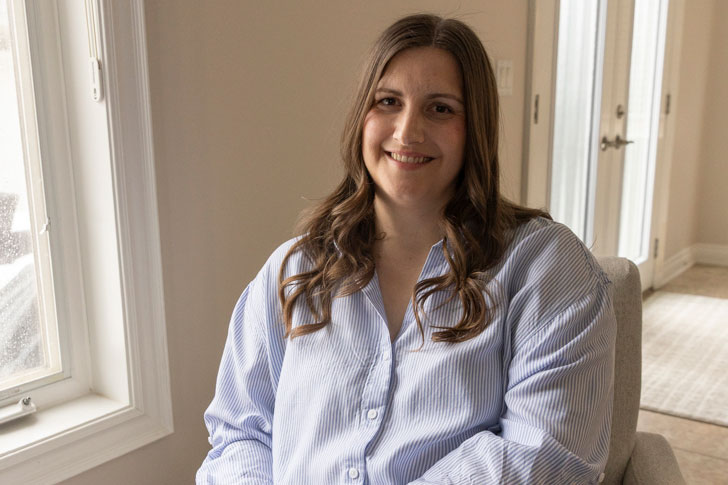
Sara Egier has always felt a deep responsibility to stay connected to her Jewish identity and to pass her heritage on to her children, honouring the family her grandmother lost in the Holocaust. It wasn’t until after Oct. 7 that she realized how essential being part of a community was to truly fulfill that responsibility.
Jewish upbringing
Egier grew up in Hamilton in an interfaith family, and experienced traditions and culture from both her parents. However, she was raised culturally Jewish: she attended synagogue on the high holidays, went to Sunday school at Temple Anshe Sholom, spent Jewish holidays with her extended family, and had a couple of Jewish friends.
She participated in community events (you may remember the Pytka-Jones sisters singing during Yom HaShoah commemorations), and was, by my definition, affiliated in the Jewish community.
Unaffiliated as a young adult
Egier kept an arm’s length from the synagogue after high school. Her family gatherings on the holidays continued, but she wasn’t engaged in the Jewish community.
Journey to Affiliation
Egier met Dave—also Jewish—which, although finding a Jewish partner wasn’t a priority, turned out to be really nice for them. They have a four-year-old son, and their plan was always to raise him Jewish. Although Oct. 7 didn’t play a role in that decision, it did become the catalyst for other more intentional decisions, like sending their son to Jewish school for kindergarten, creating relationships within the Jewish community, seeking out community events, and incorporating traditions like Shabbat dinner at home. As Egier’s network expanded, her contribution to the community has too.
She now gives back as a board member at Kehila Heschel School, where she feels her Jewish connection has taken on deeper meaning and greater impact.
About community
“What I really love about the community in Hamilton is learning from people from all different walks of life who have had changes in [their] connection to Judaism,” says Egier.
A lot of the people she’s met in the community have had similar experiences and feelings about what’s going on in the world, and for Egier, it’s been therapeutic and comforting being able to make Jewish connections. She sees Jewish identity as the foundation for connection from which deeper relationships can grow. “I bet there are a lot of other people out there that are wanting to make those connections as well. And it’s a nice community to do it in.”
Egier also recognizes that connections outside of the Jewish community are crucial too, and says we need to focus on making those relationships strong as well, to support one another.
Lost until she was found … Newcomer Ali Kellner’s story of reconnection and belonging
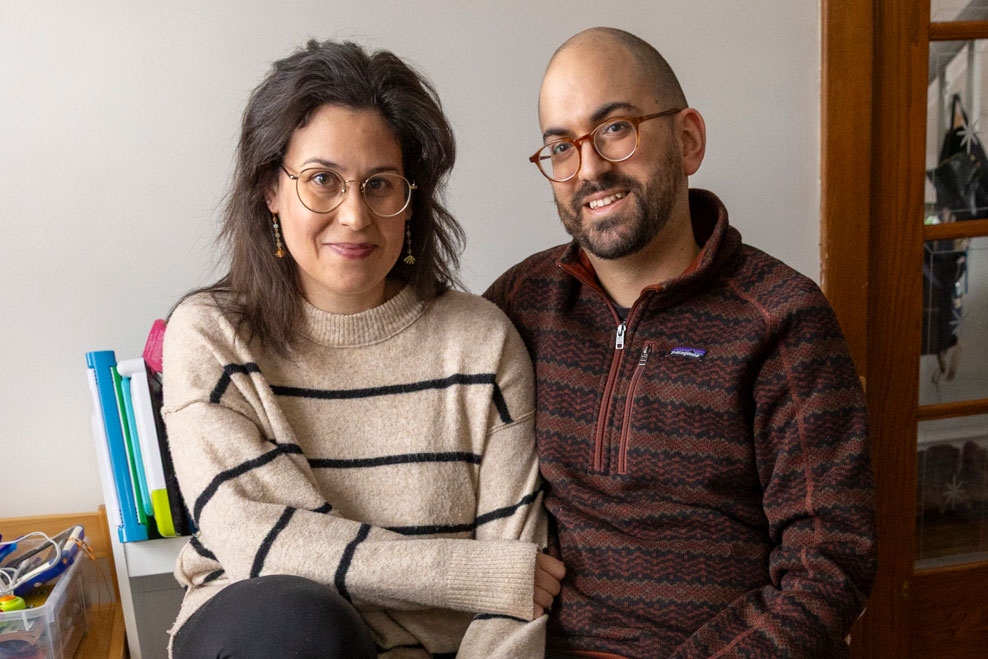
When she first moved to Hamilton, Montreal native Ali Kellner wasn’t particularly interested in connecting with the city’s Jewish community, and didn’t realize how much she needed it. “Finding the Jewish community in Hamilton was the best thing that ever happened to me,” she said. “It’s the reason we’re still here and happy, and had another kid.”
Jewish upbringing
Kellner was raised in a big Jewish suburb, surrounded by Jewish people. Her family got together on the High Holidays, but they didn’t belong to a synagogue until the time of her brother’s Bar Mitzvah, and they left shortly after. She attended Jewish summer camp and was in a youth string orchestra that played Jewish Klezmer music.
She considered herself affiliated in a spiritual and community way, and it wasn’t until being in Israel on Birthright where the innate Judaism within her was solidified.
Unaffiliated as a young adult
Kellner was one of two Jews in her post-secondary program, and that was a culture shock. Judaism wasn’t part of her life then. After graduation, she lived in Toronto, and her community was her high school friends who had also moved there, and her boyfriend — now husband — Noam. She didn’t feel a need to seek Jewish community, and never gave much thought to her Jewish identity. That was, until she moved to Hamilton.
Journey to affiliation
Ali and Noam’s son was born in 2022. They had been in Hamilton for a year and half, feeling a bit lost and depressed, not knowing anybody. Instinctively, Kellner looked into a Jewish day care facility in Hamilton, and that’s when everything changed. She met so many Jewish moms, and now it’s the only reason she’s genuinely feeling secure and happy — like she’s supposed to be here.
“As soon as I met these women, these moms who are just Jewish moms, it felt so natural and easy. It was like we had known each other forever. That’s the way I felt — like sisters.” Now, they’ve only gotten closer. And going to synagogue every Saturday for their kids’ Shabbat programming is Kellner’s favourite part of the week. Oct. 7 only fueled her need for more Jewish connections, and she went all in on her Jewish friends. She didn’t stop talking to her non-Jewish friends, but she wouldn’t talk about Oct. 7 with them.
About community
For the most part, Ali’s Jewish friends are also newcomers to Hamilton. And now she wants to pay it forward by bringing even more people together.
