
April 2026
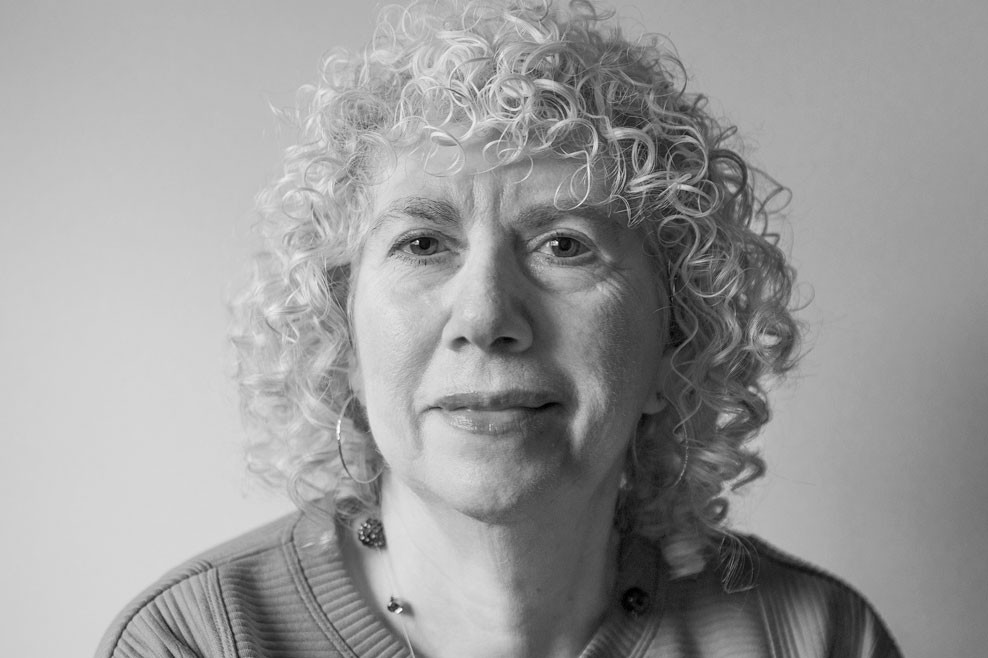
Helaine Ortmann
For the past year or so, season notwithstanding, I’ve been having trouble sleeping. Given the state of current affairs in the world and, closer to home, health issues in our own family to worry about, is it any wonder?
“Sleep problems” is how the health-care professionals titled the information handout I picked up on my first visit to the supportive care department based at Juravinski Cancer Centre. They had me at hello: I have insomnia.
That’s when you have difficulty falling asleep, staying asleep, waking up too early, or when your sleep does not rest or restore you. It occurs at least three nights a week for more than three months running, and it causes you distress.
An image pops into my head. It’s a photo I took in 2017 of my mother at Shalom Village, then in her nineties, modelling a royal blue V-necked night shirt that read: “Due to unfortunate circumstances, I am awake.”
That could be me, now. The “unfortunate circumstances” are diverse: a recent diagnosis of breast cancer followed by surgical and radiation treatment, a hormone suppressing medication for the next five years, a meniscus tear leading to a knee replacement for my husband, growing older … need I go on?
Nu, what to do?
A life-long learner at heart, I agreed to try cognitive behavioural therapy for insomnia (CBT-I). A highfalutin term (I can hear my mother’s voice) for a way to understand more about sleep, change my sleep habits and behaviours, and use tools that can help manage thoughts, emotions or body sensations that get in the way of sleep.
One of the first things I was asked to do was keep a “sleep diary” for two weeks to track patterns and gather information about my sleep drive and sleep efficiency (or in my case, inefficiency).
Wearable electronic devices and online apps aside, I went old school (pen and paper) and completed a short questionnaire every morning.
While I continued to exercise, walk in my neighbourhood, cook, bake, and garden; follow up and conversation with my doctor led me to making some practical changes in my everyday habits.
Key among them, I gave up afternoon naps (even though I felt I deserved them). Then I added restful activities to my evening routine to keep myself awake until bedtime — wordsearch, crosswords, writing, streaming romcoms, listening to favourite podcasts and music.
And finally, I re-set my biological clock by going to bed one hour later and waking up one hour earlier; this strategy suggested by the data recorded in my sleep diary.
At night, I soaked in a tub scattered with a generous serving of Epsom salts, sometimes lavender or eucalyptus scented. I massaged my feet with magnesium body cream and wore cotton socks to bed; willing the minerals to soothe my feet and the socks to keep them warm through the night, as well as boost circulation.
Lest any of this sounds too good to be true, let me be clear. It is rare, perhaps only once a week or every two, that I sleep through the night; uninterrupted. Yet, I have noticed a small shift to the positive. More often than not, I am able to fall back to sleep reasonably quickly once I awaken; and, I feel less distressed and alone.
More accepting. Sleep issues are shared by a great many others, and I now know they are common during and after cancer treatment.
Full disclosure: as I write this, it’s 5:56 a.m. and I’ve been bolt awake since 3:15. Was it the caffeine in the Zero Coke I had at supper time, with the lemon curd cake chaser?
Was it staying up until midnight to watch the Raptors lose to the Los Angeles Lakers on their first of a five-day road trip? Did I not commit seriously enough to the body scan I attempted while waiting for the sun to rise? Was the polar vortex of a temperature I had set in my bedroom not cold enough for a good night’s sleep?
Meshuga, my mother would say. There’s nothing highfalutin about that.
