
Sept. 2026
Wendy Schneider
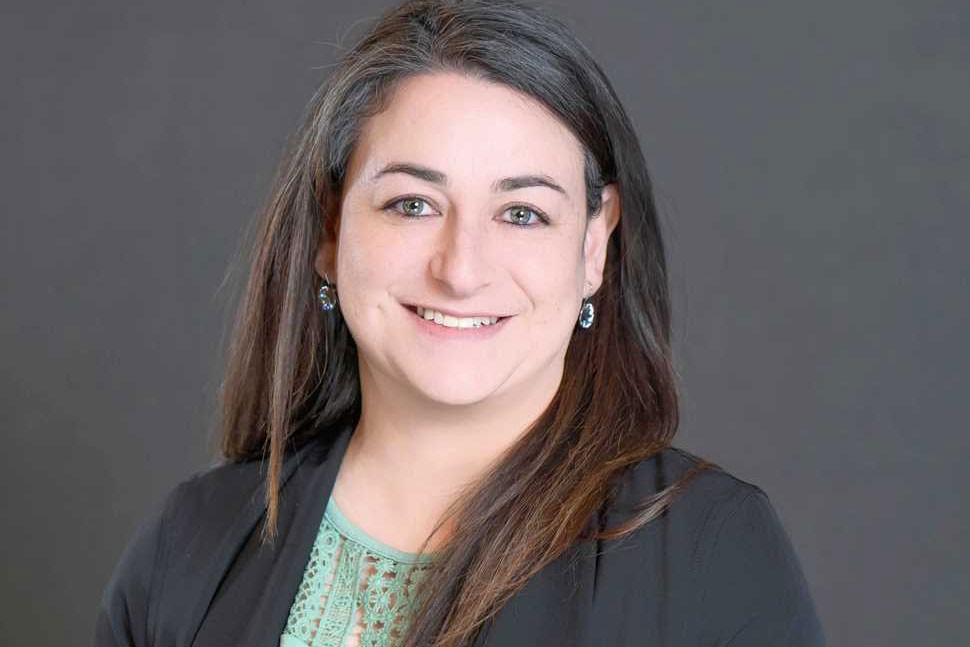
Marion Zeller has built a career helping organizations connect with people, but her newest role is deeply personal. The South African-born marketing and communications executive, who immigrated to Canada with her family in 2022, officially became CEO of the Hamilton Jewish Federation in August after serving as executive director of Windsor’s Jewish Federation and Community Centre. Zeller’s rise to leading two Jewish federations in just a few years is an unusual journey: while she came to Canada from the corporate world rather than Jewish communal leadership, her Jewish roots run deep. Raised in a traditionally Orthodox home in South Africa, she joined Windsor’s federation as a volunteer board member before being encouraged to take on the executive director role — a path that has now brought her to Hamilton, where she hopes to help the community navigate an increasingly complex moment for Jewish life.
For Zeller, the move is both professional and personal. She and her husband, Stuart, have recently relocated to Hamilton with their two children, ages 11 and 13, and say they are excited to become active members of a larger Jewish community with opportunities for families at every stage of life. While grateful for the warmth and support they found in Windsor after arriving in Canada, the Zellers see Hamilton as a place where they can put down roots, build lasting relationships and fully immerse themselves in Jewish communal life.
Before setting new priorities, Zeller says her first task will be listening. Having arrived in Hamilton only recently, she plans to spend her first months meeting with community members, organizational leaders, donors and volunteers to better understand both the community’s strengths and the challenges it faces. She believes meaningful leadership begins with understanding what matters most to the people she serves.
“I really believe in relationship building,” she said. “I don’t want transactional relationships. I want people to get to know me, and I want to get to know them.”
At a time when Jewish communities across North America continue to grapple with rising antisemitism and the aftermath of Oct. 7, 2023, Zeller believes federations have an important role to play in supporting and strengthening Jewish life. While she sees combating antisemitism as an important priority, she is equally passionate about fostering Jewish pride, identity and resilience.
“We’ve had a really rough three years since Oct. 7. We’ve taken so much grief and so much pain,” she said. “I really want to focus on Jewish pride, identity and resilience. We should be proud of who we are.”
Building that sense of connection means helping community members navigate the emotional toll of the current climate while deepening their understanding of Jewish history, culture and shared identity, said Zeller. She worries that social media, with its constant stream of conflict, outrage and misinformation, can leave people feeling anxious, overwhelmed and disconnected from one another.
“Social media is so draining,” she said. “It can really kill your spirit.”
Resilience, she says, is not only about responding to external challenges, but also about helping people develop the confidence and emotional strength to move through them. She hopes to create opportunities for conversations, educational initiatives and community programming that help people reconnect with a sense of pride, purpose and optimism.
Education, Zeller believes, is at the heart of building a confident and resilient Jewish community. She says that having a strong understanding of Jewish history, identity and contemporary issues allows people to participate in difficult conversations rather than avoid them.
Too often, she says, communities retreat from challenging discussions because they feel they do not have the knowledge or tools to engage. By strengthening education and encouraging informed dialogue, Zeller believes people can approach differences with greater confidence, respect and openness—even when they disagree.
Asked about the wide range of views that exist within the Jewish community on Israel and Zionism, Zeller emphasized the importance of education and respectful conversation. In an era of heightened polarization, she says informed dialogue allows people to engage with differing perspectives while remaining grounded in their own values and connection to Jewish life.
Zeller is also troubled by what she sees as a double standard in the way Israel and Jews are often treated in public discourse. While she acknowledges that criticism of any government is legitimate, she argues that Jews are too often held personally responsible for the actions of a foreign state in a way that members of other communities are not.
For Zeller, conversations about Israel are also deeply personal. Several members of her extended family live there, and like many Jews with loved ones in the country, she follows events with a mixture of concern and anxiety. While she believes people have every right to criticize Israeli policies and governments, she says discussions about Israel should also recognize the human dimension—that for many Jews, the issue is connected to family, identity and deeply personal relationships.
She notes that Canadians with ties to countries around the world are generally not expected to answer for every decision made by those governments, and believes the same standard should apply to Jews.
Outside of her professional goals, Zeller is looking forward to building a life for her family in Hamilton and becoming involved in the community. She and her husband have two children and a mini Bernedoodle named Jozi—a name inspired by Johannesburg, where Zeller was born.
At home, the family enjoys creative pursuits. Stuart paints, while Zeller enjoys baking, especially her signature baked cheesecake.
As she begins this next chapter, Zeller says she is looking forward not only to leading the Hamilton Jewish Federation, but to becoming part of the community itself. For her, the role is about more than organizational leadership—it is about relationships, shared responsibility and creating a Jewish community where people feel connected, supported and proud of who they are. She hopes that, over time, the community will come to know her not simply as its CEO, but as a neighbour, volunteer and fellow member invested in its future.
