
Sept. 2025
Helaine Ortmann
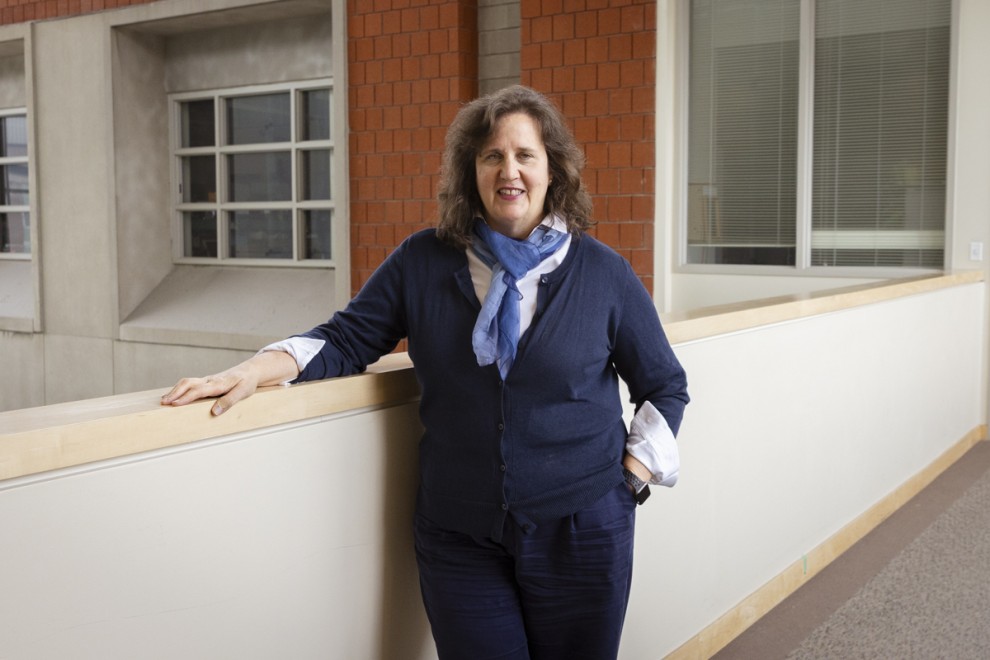
Hamilton Health Sciences (HHS) has welcomed back one of the country’s foremost experts in cancer genetics and high-risk breast cancer. Dr. Andrea Eisen is a leading expert in cancer genetics and high-risk breast cancer; a physician treating patients with advanced breast cancer; a renowned researcher; a scientist with the Escarpment Cancer Research Institute located at Juravinski Hospital and Cancer Centre; a mentor to junior faculty and students; and the provincial breast cancer lead for Cancer Care Ontario (Ontario Health). In the following Q&A, Dr. Eisen shares her vision for the future of breast cancer care and research in Hamilton.
Dr. Eisen, you are no stranger to Hamilton, having launched your career as a medical oncologist at Hamilton Health Sciences (HHS) more than 20 years ago, before relocating to Toronto. What brought you back to our community?
I had close connections to the health care team; the academic breast cancer program is highly regarded; and there is a great foundation in cancer genetics with a highly skilled program of genetic counsellors. There are lots of patients who need assessment and are available to participate in research. Being part of McMaster University, a strong international performer in health care research, was key for me. My mother’s family was from Hamilton, and I had an aunt here; so I made many trips to Hamilton in my lifetime. You’re right; I wasn’t a stranger.
The Buffett Taylor Chair in Breast Cancer Research was previously held by Dr. Mark Levine; an esteemed HHS medical oncologist and breast cancer researcher. What is it like to “walk in his footsteps”?
Dr. Levine was instrumental in recruiting me the first time, 25 years ago. He’s been extremely helpful in helping me establish contacts and setting up some research studies. Mark and I are co-investigators on a grant (received before I got here) to expand on and improve the learning health system that he started with investigators several years ago. We’re adapting it to our new electronic medical record and including information on breast cancer surgery outcomes and cancer genetic testing for the breast cancer population.
How do your personal values and professional expectations line up with your new clinical home at Juravinski Hospital and Cancer Centre (JHCC)?
JHCC is unique: a highly specialized tertiary care academic teaching hospital with state-of-the-art oncology care; yet with a community feel. (“Heimish,” we agreed.) The centre and hospital are valued and cherished by the population of Hamilton. I’ve worked in larger centres and I have to say there’s a difference. For example, I participated in the BRIGHT Run and it was so meaningful to me; to witness how everybody works together in such a successful endeavour.
Has anything surprised you about setting up shop at the Juravinski?
A few things: the expansion to Juravinski’s physical footprint over the years; the strong support for chemotherapy from the pharmacy team as well as the other supportive services; and the excellent model in medical oncology of doctors and nurses working together as primary resources for the patient. This provides great continuity of care. The strong support from the Foundation for the cancer program and research support is remarkable. On another note, the economic climate of the city has changed greatly. Twenty-five years ago, many people were connected to the steel industry and had excellent benefits. It’s different now, and I see it reflected in my patients, their needs, and the resources and supports they require to get through some pretty intensive treatment.
You have built an international reputation as an expert in cancer genetics and high-risk breast cancer. Yasher koach, Dr. Eisen. What drew you to these areas of specialty?
When I finished my training in medical oncology, I really wanted to have an academic career but you needed to do extra training in a specialized area. At that time, in 1994 and 1995, the BRCA 1 and BRCA 2 genes had just been identified; an exciting new area. I sought out extra training in cancer genetics and studied at the University of Pennsylvania, Philadelphia for three years. When I came back, there was a great opportunity to expand on and help build the cancer genetics program here. I wanted to work in breast cancer and I was interested in women’s health. It’s a bit of a calling to give back in this way.
How involved are you in genetic counseling and talking to patients and family members about how to help prevent future cancer cancers?
Genetic counsellors are a Masters prepared specialty: the front line; first to talk to a patient about the pros and cons of genetic testing, the potential results, and to provide them with the results. After the test is done, if there's a significant result that's identified, the patient is referred to a cancer genetics expert like me or one of my colleagues to address the recommendations in more depth considering whether a patient has cancer, whether it's early cancer or advanced cancer. If for example someone is managing or dealing with advanced ovarian cancer in the acute phase, getting a screening mammogram or a breast MRI is probably not the highest priority. Typically, those kind of nuances and individualized recommendations are made by a physician. There are such high volumes of patients now and the criteria for genetic testing have expanded so much that it's probably not feasible for a genetic counsellor to do one-on-one counselling with every patient. So, if it's an obvious case where genetic testing is indicated for women diagnosed at a very young age or a Jewish woman with breast cancer, we now have the oncologist do some brief counselling. If the patient is agreeable and consents to have the genetic test, the genetic counsellor can manage the results. If the test result is negative (no mutation), there might be some abbreviated counselling from the genetic counsellor. If there is a true mutation where the genetic counselling input is needed, that person would get more attention. In this new model called “mainstreaming,” we've shifted the paradigm so that the care from the genetics team is being focused on the patients who most need it.
It must be a fulfilling experience to conduct clinical research and provide direct care for breast cancer patients.
It’s very exciting to engage patients in research studies. I’m not a genetic counsellor but as a breast medical oncologist, I see and treat people with cancer. I like to provide advice to women at increased risk on how to stay healthy and prevent cancers. Prevention is key. Right now we rely on someone who may just been diagnosed with cancer and found out that they have a genetic predisposition to, not only worry about themselves, but ask them to be proactive by reaching out to their family members to talk to them about being tested. This is a vulnerable moment and not always the best way.
Here's an opportunity for a bit of a public service announcement - a new focus in cancer genetics. We’re participating in a research study, called “cascade testing,” with St. Michael’s Hospital and Women’s College to see if digital technology will help encourage family members (of newly diagnosed breast cancer patients with genetic mutations such as BRCA 1 and 2) to participate in testing. What if a person recently diagnosed could suggest to their loved ones to log onto a website that would explain everything? This is additionally helpful because privacy laws in Canada preclude us from contacting relatives.
If the breast cancer surgeon is the first health care team member that a person sees, is ethnicity part of that conversation?
Yes, to confirm if you are Jewish and to talk about that and encourage testing. Or if there are other obvious criteria, for example, if the patient is 35 and has breast cancer; or if someone is under 60 and has triple negative breast cancer; then that's another indication for doing genetic tests. Certainly where it's obvious that patients are eligible for testing, we encourage clinicians to order those tests up front, making for a much easier expedited process.
Can you comment on what it's like to be a female breast cancer oncologist and researcher?
It's a great thing to have female representation. I think the face of medical oncology has really changed. When I started here 25 years ago, I was one of the only women medical oncologists based here at the Cancer Centre. Now, if you look at the composition, it's a very significant proportion of women and in our training program as well.
You helped get a fledgling cancer genetics program off the ground, and you're now developing an advanced breast cancer research program with high risk hereditary cancer syndromes with implications not only for the Hamilton area, but worldwide. How profound and humbling. What your thoughts about that?
It's important to recognize that, 25 years ago, genetic testing for BRCA 1 and BRCA 2 and some of the colon cancer syndromes was just on the cusp of switching from a research program to being a clinically funded test supported by the government. More recently, cancer genetics has had another huge transformation and investment by Ontario Health and establishing genetics programs not only in cancer, but in cardiology and neurology, and really formalizing and injecting funds into that. So while I appreciate that you've given me some credit for helping the programs get started here, there's been a huge investment provincially as well, and a recognition of the role of cancer genes in clinical oncology. Ours is a high demand program with excellent and highly skilled practitioners.
What is important for Ashkenazi Jews in our community to know?
The criteria for doing genetic testing in the Jewish population are quite relaxed compared to other populations because there's a higher prevalence of the mutations. If someone has any family history of breast or ovarian cancer (understanding that medical information might be lost or missing because of the Holocaust), and is Ashkenazi Jewish, genetic testing may be a good option. It's a simple OHIP-funded blood test, with a much faster turnaround time now. This genetic information, or genetic counselling at a minimum, will help people understand risks (their own and for family members) and make informed decisions about cancer care and treatment.
What about Sephardic Jews?
It’s a good question. These mutations that we see commonly in BRCA 1 and 2 tend to be in the Ashkenazi population and that's just because of how founder effects occur. They occur when a population is relatively isolated, either geographically or culturally. So for example, in Iceland they have a particular mutation in BRCA 1 and 2 that's prevalent in their population and accounts for most of their hereditary cancer. And in the Jewish population we see three mutations in BRCA 1 and BRCA 2 and that's just because of our geography, of how the Ashkenazi population was situated. In Israel, there are very few people that are purely Ashkenazi or purely Sephardic anymore … because of blending.
What role is Artificial Intelligence (AI) playing in breast cancer care?
One of the projects that I'm involved in with Dr. Levine is this learning health system using data engineering and AI to delve into the huge amount of electronic information we have on patients; to be able to organize and interrogate it to answer questions. One of the things of interest to me and what we're working on now is if you can figure out which patients with breast cancer who are in our database have had genetic testing, what the results were, what the management options were after that, and if you can figure out the ones in whom genetic testing was perhaps missed. The analysis is sophisticated work.
Sometimes you have to use AI tools to read the notes and pull out information from there. Sometimes you can get it from more structured data, like reports. That’s novel because there isn't one repository in Ontario that maintains the genetic test results currently. I’ll keep track of the labs, who had the genetic test, and we can certainly see who had breast cancer and who didn't, but to be able to link up the type of breast cancer, the age of diagnosis, hopefully we're going to be able to capture some of the family history and whether genetic testing was done or offered. Then, we could go back and contact someone and say we noticed that you didn't have testing. Can we offer it to you now? So that's a really novel area that I'm really interested in.
I’d also like to point out that Dr. Ashirbani Saha is the first holder of the BRIGHT Run Breast Cancer Learning Health System Chair, a permanent research position established by the BRIGHT Run in partnership with McMaster University. The recruitment of an engineer to a clinical department is unique. Her expertise in AI is helping us improve care for people with breast cancer.
What one piece of advice or encouragement can you offer to breast cancer patients and their families?
Be hopeful. We are making huge progress in outcomes; and the vast majority of women diagnosed with breast cancer now are cured of their disease, and they don’t have a recurrence. Even in my career, the survival rates for breast cancer have improved significantly. This is because of organized screening (Ontario Breast Screening Program) available at age 40; a separate program for women at high risk who for example have a genetic predisposition that includes mammogram and MRI; and much improved treatments particularly at early stages; and much improved treatments particularly in the early stage. How we treat breast cancer now is completely different than when I was here 25 years ago.
We still see women, unfortunately, who present with what we call locally advanced disease with tumours that are very large. There's a lot of interest in why that is. Why and what would keep a woman who has access to health care from pursuing care earlier when there's an obvious problem in the breast? We still have excellent treatments for those cases, but there's work to be done.
