
Sept. 2026
Jen Gilbert
Goose bumps. I don’t get them often, so when I did, I knew it was a sign. My energy had shifted; I felt inspired. Alyse Nishimura and Rebecca Kloosterman gave me goose bumps, and I knew I had to share their stories.
These women found their way back to the Jewish community after Oct. 7, in seemingly different journeys. Underneath, however, each journey was deeply rooted in a sense of Jewish identity, identity the women had as kids and had perhaps left behind as young adults.
This was consistent with the stories shared in Part 1 of this series.
Yet something new came up: the notion of being an outlier if someone doesn’t “look Jewish,” feel “Jewish enough,” or is wrestling with multiple identities. To be clear: the Hamilton Jewish community is here to welcome everyone, no matter how they look or feel. “There’s no such thing as too Jewish or not Jewish enough,” said Kloosterman. “It’s whoever you are, who you want to be, and how you want to express yourself.”
It takes tremendous strength and courage to open the portal that houses our painful memories of what we faced after Oct. 7, and even more bravery to relive them publicly. The women featured here have done just that in the hopes of reaching others who may feel isolated or disconnected, and to offer a sense of belonging, possibility, and hope at a time of rising antisemitism and growing uncertainty.
Thank you to Alyse and Rebecca for sharing your stories.
Can you relate? Do you feel Oct. 7 made you more driven to seek Jewish connections? I want to hear your story and continue this conversation next issue. Connect with me at: [email protected].
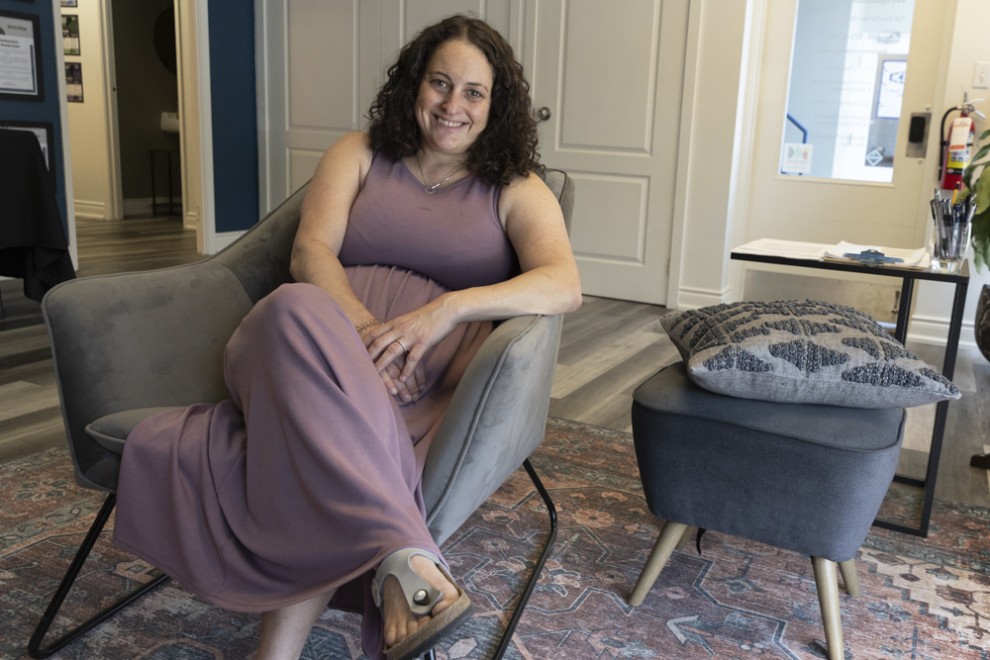
Alyse Nishimura
Jewish Upbringing
Alyse Nishimura sees value in finding Jewish community in multiple places. From Oakville to Hamilton to summer camp, the more involved she and her family gets, and the bigger their community, the more connected they feel. Nishimura always knew that she was Jewish. She went to religious school on Sundays, had a Bat Mitzvah, and celebrated some holidays with her extended family. At school in Oakville, she was the only Jewish student. Her first experience around other Jewish people was at overnight camp, and it was a really good feeling. In university, she made friends with other Jewish students, and having Jewish people in her everyday life was enough.
Journey to affiliation
In 2020, Nishimura and her Jewish husband moved from Oakville to Hamilton. They stayed members of their synagogue in Oakville — it was the same synagogue Nishimura belonged to as a kid — and recognized the importance of building community with like-minded people after Oct. 7. There was antisemitism in their neighbourhood. Her daughter wore dreidel pants to school one day, attracting the only other Jewish student there. They became instant friends, and subsequently their families became friends — Nishimura’s first taste of Jewish community in Hamilton. Through this family, Nishimura and her family have become more involved here. They still go to shul in Oakville, but there’s often collaboration between the synagogues in Hamilton and Oakville. When her daughter experienced antisemitism at school, Gustavo Rymberg, then CEO of the Hamilton Jewish Federation, advocated for Nishimura and her family, helping connect them with the right people and resources. Having the support and backing from the Federation helped her family have more confidence.
About community
Nishimura is all about community; recognizing how being part of a community, connected to people, and seeing how to advocate helped her kids know they don’t have to put up with hate at school. They have the tools to stand up for themselves and to know what’s right. For Nishimura, being connected to the Jewish community is more than just religion: it’s having culture, tradition, and a sense of belonging. Everyone wants to feel a sense of belonging, and the Jewish community provides that for her and her family. It also supports their mental health. It’s easy to get stuck or repel from a group with a target on its back. There’s power in community, and when we’re connected, changes can be made on a bigger scale. She says there’s no judgment; show up how you can show up, and you’ll be part of the community. And the more you want to be here, the more you’ll be welcomed.
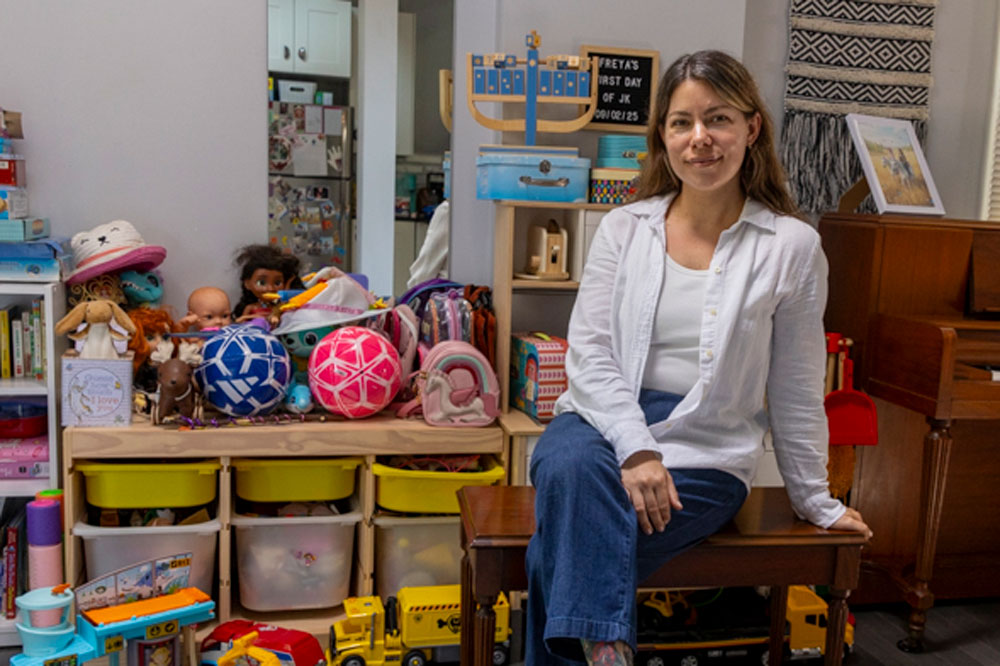
Rebecca Kloosterman
Jewish upbringing
Rebecca Kloosterman, always the “Jewish friend” in her circles regardless of her connection to Judaism, was lost in the diaspora. Simmering in her subconscious were reminders of her Jewish ethnicity, and she wrestled with the question of how she could come home to who she was and not feel like an outsider within and outside of the Jewish community.Kloosterman grew up in a home with strong Jewish traditions, identity, and excitement. She went to synagogue, Sunday school, camps, and events. When she was about 10 years old, her parents split, pausing everything Jewish they did as a family. It was the start of a big disconnect for Kloosterman. Surrounded mostly by people who weren’t Jewish, Kloosterman’s priorities took her away from Judaism — it simply wasn’t on her radar. However, she always felt Jewish.
Journey to affiliation
In her late 20s, Kloosterman went on Birthright, responding to a calling she felt to reconnect. She was driven by a curiosity to explore what being Jewish meant, and it was life changing. When Oct. 7 happened, it became very apparent that there was a level of hate being directed at people just for who they were — for existing. Kloosterman knew her life would likely never be the same. Her first reaction was to think she should probably never tell anyone ever again about who she is. She was in her 30s and was very rooted in her Jewish identity, but not connected within the Jewish community. When her friends and neighbours were posting scary things about Jews online, she was faced with a decision: she could either shut down or find a way to move through this and connect with people where she could be herself. With her connection to her Jewish identity threatened, she realized she was deeply rooted to that identity. It brought her home to herself and into the Jewish community. She accessed Jewish therapist services, now sends her kids to Jewish day school, and has a circle of Jewish friends. She threw herself in. When she meets other Jewish people, there is relief, and she doesn’t have to hide anymore. Today, she is filled with Jewish pride.
About community
When she first went to pick up her kids from school, she was a bundle of nerves. With all her tattoos, she doesn’t see herself as looking like a Jewish woman or a Jewish mother, but she immediately felt safe at the school. It’s about who we are on the inside. Kloosterman doesn’t subscribe to picking a side, even within the Jewish community. She believes we can fight against a system that wants to separate us by proudly reconnecting with each other and with who we are. She wants all the Jewish people who feel they look different or don’t fit in to come out. There has to be a space for us to come when there’s nowhere else to go, and she wants you to know: There’s space for you. Come as you are.
