
Sept. 2026
Helaine Ortmann
Numbers have never been my strong suit.
That is why it was with some degree of disbelief that I calculated 56: the number of years ago (not my age) that I set foot on campus; making my way, without the benefit of GPS, across the quad to Togo Salmon Hall (then, Arts II) at McMaster University. During my five years there, I soaked up knowledge and ideas, delivered by professors who were passionate, dedicated, erudite and accessible. I was smitten with this brave new world of academe.
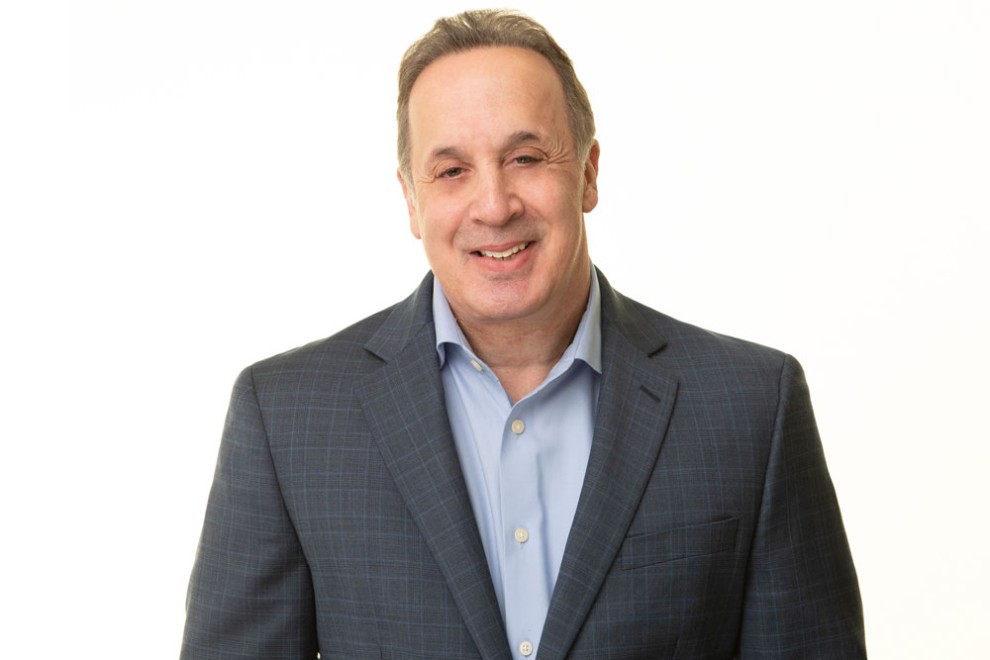
It was those same qualities that resonated with me in my wide-ranging conversation, via Zoom, with Donald E. Abelson, PhD, Social Sciences Professor of Canada U.S. Relations, and Professor, Political Science at McMaster University. I had reached out to him after reading one of his opinion columns in The Spectator, “Let trauma guide, not constrain, decisions,” where he discussed, against the backdrop of the U.S.-Israel-Iran war, whether people and states can move beyond trauma; and summon the strength, moral fortitude and will to embrace a more constructive path forward.
He was visiting the Halbert Centre for Canadian Studies, Hebrew University of Jerusalem; established by Canadian philanthropists Ralph and Roz Halbert in the 1970s to bring Canadian and Israeli scholars together. There, for a month, to share the work he and his McMaster colleagues were doing on civic engagement and political leadership.
Professor Abelson had me at hello with a personal anecdote. Early on, when he started at Western, a dear friend and colleague said, “Don, just remember one thing. If you ever find yourself being the smartest person in the room, find another room.” Abelson confided: “I can tell you, at Hebrew U., at the Halbert Centre, there would never be a need for me to find another room. That is what I will take away; along with that solidarity as a scholar, as a Jew. I couldn't ask for anything more.”
Many of his Israeli colleagues thanked him for coming, saying the rest of the world had turned their backs on them. Abelson lamented that people who were trained to be objective and engage in critical thinking had allowed politics to interfere. “It's a mitzvah for me,” he said. “I encourage my Canadian colleagues to take advantage of coming to a place like Israel. The universities here are first-class, world-class. It's an experience I will never forget.”
Professor Abelson shared another deeply moving experience while he was at the Wall, praying. No stranger to this sacred site, he turned around to see units of 18-and-19-year-old soldiers; teenagers engaging in a military service, in their uniforms, with rifles slung over their shoulders.
He reflected, “We in the diaspora, despite the rise in anti-Semitism, remain sheltered from a lot of what we see in the Middle East. We have a tendency to complain about things that will pass in a day or two. Then you come to Israel and see these young people who should be at university, and going out and enjoying themselves. Their ultimate goal is to put their lives on the line to protect not only the State of Israel, but Jews around the world. I knew this intellectually, I understood this politically; but as a parent, as a Jew, as someone who has studied U.S. politics pretty much my entire adult life, it really took hold of me.”
I wondered how he would bring that sensibility back to his students at McMaster. “When we're dealing with difficult topics like the Israeli-Palestinian conflict, like the recent war involving Iran,” he said, “I approach it by explaining what got us to this point; the different priorities of the states involved; how and why cooperation, international and regional, is often difficult to achieve. I try to present the conflict in a way that people can place themselves in the shoes of decision makers; building into history and politics, the emotions of the people involved. I say to students, where you find yourselves politically is entirely up to you. Part of the university experience is finding your own voice. It's about maturing, it's about digging a little deeper, and not just taking for granted what one person or group of people have said. My responsibility is not to indoctrinate, it's to educate.”
As a student of Humanities myself, I was buoyed to learn that Professor Abelson had a high regard for looking at public policy from multiple perspectives, including social sciences, humanities and the arts. “One of the challenges that academics have had for many, many decades is that we tend to feel more comfortable in our own silos. We're trained to become experts in a field of political science, economics, sociology, English, history, anthropology, whatever it might be. That has a profound impact on how we see our discipline, and how we see the academy.
I encourage my students to embrace subjects that can help provide valuable insights into what people think, and how they interact. That helps, not necessarily to complete the picture, but to improve it significantly, to expand the canvas. I want my students to be able to say, I read such and such a piece on American politics, but then when I compared it to how a historian approached it, or an economist, or a sociologist, or a member of the English department, oh my G-d, I was exposed to so many different layers.”
Given these fraught times, I could not help but ask what drew Professor Abelson to his specific field of research and teaching: American politics and U.S. foreign policy. It turns out his paternal grandparents were from the United States: Kansas City, Missouri, and Cleveland, Ohio. Dinner conversation in his home was all about Canada-U.S. relations or the difference between presidents. His father travelled the U.S. extensively, and that became part of his persona. In high school, he was more interested in American history. At the University of Toronto, he studied with a “fabulous” professor who opened up a new world for him.
About the relevancy of his work, he commented, “Would there ever be a better time? Probably not, but I see my role as trying to explain and contribute in a thoughtful way. Despite the fact that I've been a political scientist my entire adult life, I actually hate politics; I love process and how people make decisions. I love the responsibility of shaping the minds of others in a constructive way. I had very smart, caring professors at the University of Toronto, later at Queen's, who saw in me potential that I didn't see in myself. That's what I try to do with my students. They might look in the mirror and not see that in themselves but if I see it in them, and I can help, that's what I do. That's what I owe them. That's what I owe McMaster which I think is a fabulous university; a special place.”
As we talked about current events in the Middle East and prospects for peace, I asked Professor Abelson if he was optimistic about the future. “If we are able to encourage bright, young people to pursue roles in leadership, at an early stage, we can begin to change the climate over time. The only thing that's going to change the situation we're in, is new thinking: people who embrace peace more than war. People who see alternatives we may not have considered.”
He continued, “I'm optimistic that, so long as that human spirit and condition is alive, we can find a path forward, but the academic mind that I embrace tells me there'll be a whole lot more trauma before we get to that point. It's not going to be easy. Whoever imagined there'd be a handshake between Menachem Begin and Anwar Sadat? Who would ever have expected Yitzhak Rabin to meet in the Rose Garden with Yasser Arafat? It's happened before, it's got to happen again.”
Fast forward 56 years, across time zones and distant continents, connected by virtual technology once deemed science fiction, this lifelong learner was transported to the realms of hope and possibility inspired by the ideas and perspectives of yet another great teacher.
